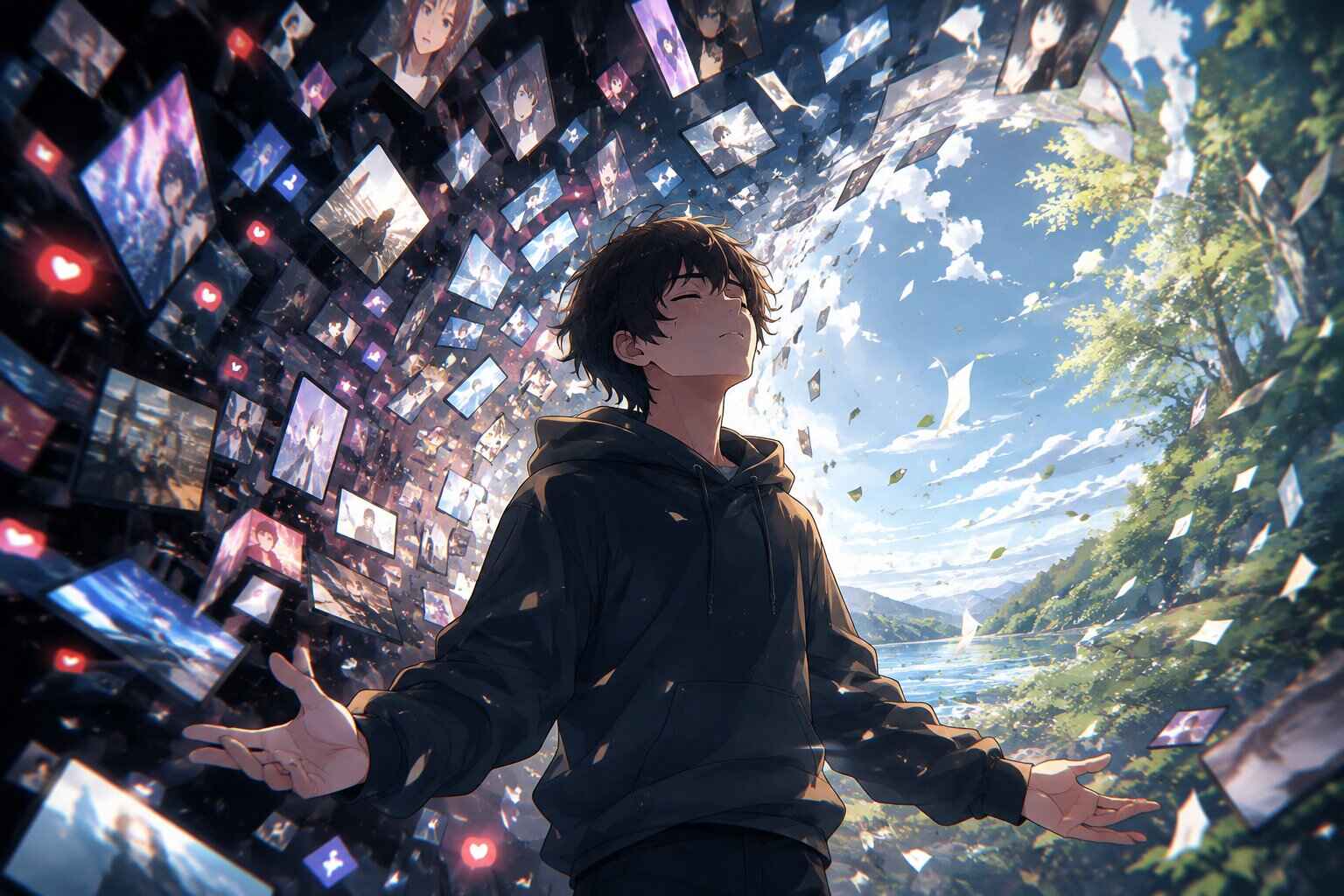
You open your laptop to do one thing.
Five minutes later, you’re checking Instagram.
Then YouTube.
Then a notification.
Then another tab.
Then you somehow end up watching a 47-second video about something you didn’t even care about.
And suddenly you realize:
“Why can’t I concentrate anymore?”
If that sounds painfully familiar, you’re not alone.
Short-form video has become one of the dominant ways people consume information, and researchers are increasingly studying what happens when our attention is repeatedly pulled toward fast, constantly changing content.
A 2026 systematic review and meta-analysis examined 58 studies involving more than 96,000 participants. Problematic short-form-video use was associated with poorer well-being and higher levels of anxiety, stress, loneliness, depression and boredom. Importantly, the researchers also noted that the evidence doesn’t prove simple cause and effect.
So no, your brain probably isn’t “broken.”
But your attention environment may be training you to expect constant stimulation.
And that’s something you can change.
📱 The Problem Isn’t Your Phone – It’s the Pattern
Let’s make one thing clear.
Using TikTok, Instagram Reels, YouTube Shorts or similar platforms isn’t automatically harmful.
The bigger issue is how you use them.
There’s a huge difference between:
“I’m going to watch a few videos for 15 minutes.”
and
“I’ll keep scrolling until something finally feels satisfying.”
The second pattern can turn into passive, repetitive consumption.
One video ends.
Another immediately begins.
Your brain doesn’t have to decide what comes next.
The algorithm does.
And that means you rarely experience the tiny moment of boredom that normally tells your brain:
“Okay, let’s do something else.”
Researchers studying short-form video have specifically distinguished ordinary use from problematic or compulsive patterns because simply counting minutes doesn’t tell the whole story.
🧩 Your Attention Is Being Fragmented
Imagine trying to read a book while someone interrupts you every 20 seconds.
Even if every interruption lasts only a few seconds, you’d struggle to get deeply involved in the story.
Digital environments can create a similar experience.
🔔 Notification
📱 Message
🎥 Short video
💬 Comment
📰 Headline
🎵 New sound
📸 New post
Your attention keeps switching.
A 2026 study of Indian adults aged 18-45 found an association between extensive short-form-video/instant-messaging use, attention fragmentation and emotional distress.
That’s why you might experience something strange:
You can watch 100 short videos but struggle to watch a 20-minute educational video.
It’s not necessarily that your attention disappeared.
You may simply be practicing fragmented attention more often than sustained attention.
🧠 “Brain Rot” Might Be Funny – But the Problem Behind It Isn’t
You’ve probably seen people joking about “brain rot.”
The term has become part of internet culture because people recognize the feeling:
“I have consumed so much random content that my brain feels fried.”
The joke is relatable because something real sits underneath it.
When your entertainment constantly provides novelty, your brain doesn’t have to tolerate much boredom.
And boredom is actually useful.
Boredom creates space.
That’s when you might:
💡 Think of an idea
🎨 Get creative
🚶 Go for a walk
📖 Read
🧠 Reflect
💬 Talk to someone
🌿 Notice what’s happening around you
If every uncomfortable second is immediately filled with content, you lose opportunities to practice simply being unstimulated.
😵💫 Why Doomscrolling Makes It Even Worse
Now add something more emotionally intense:
bad news.
You see one disturbing story.
Then another.
Then a political argument.
Then a disaster.
Then someone’s angry reaction.
Then another update.
You tell yourself:
“I just want to know what’s happening.”
But 45 minutes later, you feel worse.
That’s doomscrolling.
And recent research continues to find associations between doomscrolling and anxiety, stress and poorer well-being.
The American Psychiatric Association’s 2026 annual poll also found that 62% of Americans reported current events as a source of anxiety, tied with finances as the leading source in the poll.
So constantly consuming stressful information isn’t happening in a vacuum.
People are already anxious about the world.
Then they’re carrying that world around in their pockets all day.
🌙 And Then You Take It to Bed
Here’s where the cycle gets nasty.
You’re tired.
You get into bed.
You tell yourself:
“I’ll scroll for five minutes.”
One hour later…
You’re still awake.
The American Academy of Sleep Medicine reported that 38% of surveyed U.S. adults said doomscrolling before bed makes their sleep slightly or significantly worse, with the figure reaching 46% among adults aged 18-24.
You’re not just losing sleep.
You’re starting the next day already exhausted.
Then you’re more likely to seek easy stimulation.
More scrolling.
More distraction.
More fatigue.
And the cycle repeats.
The achievements pile up. The satisfaction doesn't.
🔥 The 7-Day Attention Reset
You don’t need to delete every social-media app.
You don’t need to become a monk.
And you definitely don’t need a ridiculous “dopamine detox.”
Instead, try this.
📵 Day 1: Turn Off the Noise
Disable non-essential notifications.
Keep calls, important messages and genuinely useful alerts.
Everything else?
Gone.
Your phone shouldn’t constantly demand your attention.
⏰ Day 2: Create a Scroll Window
Instead of randomly checking social media throughout the day, choose specific times.
For example:
20 minutes after lunch.
20 minutes in the evening.
When you’re outside those windows, don’t negotiate with yourself.
You already decided.
🧠 Day 3: Practice One-Tasking
Pick one activity.
Only one.
Eat without watching videos.
Walk without scrolling.
Read without checking your phone.
Work without jumping between five tabs.
Start with just 10 minutes.
You’re rebuilding the ability to stay with something.
🌿 Day 4: Let Yourself Be Bored
This one is surprisingly difficult.
Sit somewhere.
Walk.
Look outside.
Do absolutely nothing for 10 minutes.
Don’t immediately reach for your phone.
At first, it might feel uncomfortable.
That’s okay.
You’re practicing something most of us rarely practice anymore:
not being stimulated.
📖 Day 5: Replace Instead of Remove
This is important.
If you simply remove scrolling, you’ll eventually become bored and return to it.
Replace it.
Create a list of easy alternatives:
📚 Read 5 pages
🎧 Listen to music
🚶 Take a short walk
✍️ Journal
🎨 Draw
🧩 Do a puzzle
🌱 Take care of a plant
☎️ Call someone
🏋️ Move your body
The goal isn’t less stimulation.
It’s better stimulation.
🌙 Day 6: Protect Your Last Hour
Give your brain a landing zone before sleep.
Try:
60 minutes before bed → no doomscrolling.
Dim the lights.
Put your phone away.
Take a shower.
Stretch.
Read.
Journal.
Listen to something relaxing.
The American Academy of Sleep Medicine recommends powering down electronics 30–60 minutes before bed and keeping phones away from the bed when possible.
🔥 Day 7: Ask Yourself One Question
At the end of the week, ask:
“Do I actually feel better when I consume more content?”
Not:
“How many hours did I use my phone?”
Ask:
“How do I feel afterward?”
Energized?
Inspired?
Connected?
Or…
😵💫 Drained
😐 Numb
😰 Anxious
🥱 Exhausted
🧠 Mentally scattered
Your answer tells you more than your screen-time number ever could.
🧘 You Don’t Need to Quit the Internet
This isn’t an anti-technology article.
Technology can help us learn, communicate, work, create and find people who understand us.
The problem begins when every empty moment becomes a scrolling opportunity.
You don’t need to disappear from the internet.
You need to make sure the internet doesn’t disappear into you.
Your attention is one of the most valuable things you own.
Don’t give all of it away for free.
💭 One Last Thought
You don’t need a better attention span as much as you need a better environment for your attention.
Make your environment quieter.
Make your phone less demanding.
Make boredom acceptable again.
And give your brain enough space to remember what it feels like to focus.
🌱 Make Your Everyday Life a Little Easier
If you’re working on anxiety, stress, sleep, mindfulness or simply trying to build healthier daily habits, you can find practical tools and exercises on the Aid My Soul Resources page.