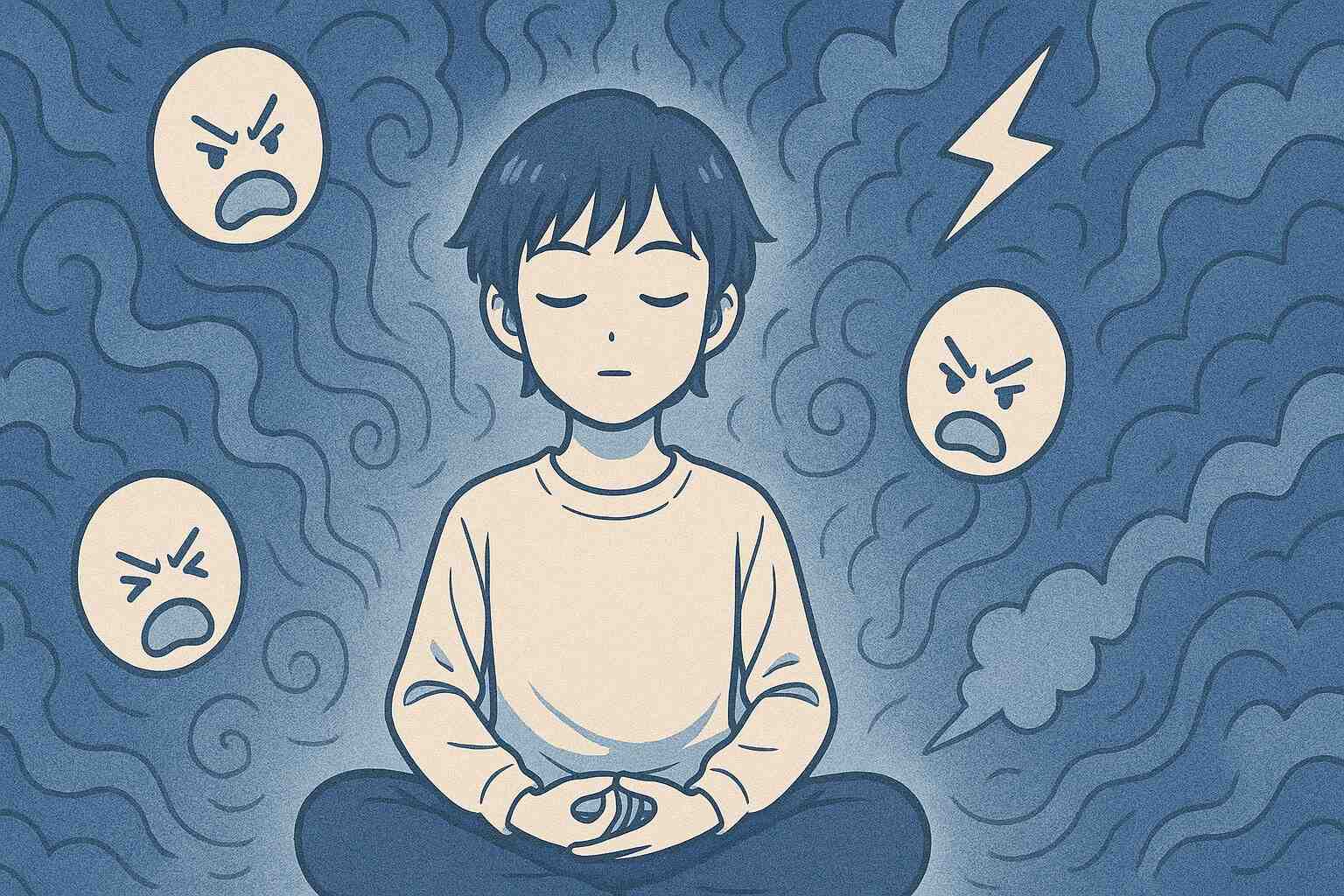
Your phone buzzes.
Someone cuts you off.
A coworker makes a passive comment that stings.
Without thinking—you react.
Frustration, anger, defensiveness—like a reflex you can’t stop.
But what if you didn’t have to react to everything?
What if you could observe your emotions without being hijacked by them?
That’s the art of not reacting.
That’s mindfulness mastery.
Why Do We React So Fast?
Your brain is wired for survival.
The amygdala—the brain’s alarm system—detects threats and triggers instant reactions.
In ancient times, that kept us alive.
Today, it makes us snap at emails and overthink texts.
Reacting is fast.
Responding takes awareness.
The Cost of Reactivity
Reactivity feels good in the moment—but it:
-
Escalates conflict
-
Clouds your clarity
-
Drains your energy
-
Leaves regret in its wake
Mindfulness gives you the space between stimulus and response.
And that space? That’s where your power is.
5 Mindful Techniques to Stop Reacting
Mastering the art of not reacting doesn’t mean bottling emotions.
It means watching them—without becoming them.
Here’s how to do that:
1. Name the Emotion
When emotion rises, silently label it:
-
“This is frustration.”
-
“This is fear.”
-
“This is hurt.”
Neuroscience shows that naming your emotion calms the amygdala.
It shifts you from feeling to observing.
2. Use the S.T.O.P. Practice
-
S – Stop
-
T – Take a breath
-
O – Observe what’s happening inside and around you
-
P – Proceed with intention
This gives you a moment to choose instead of react.
3. Feel Without Fueling
Notice where the emotion is in your body.
Is it tightness in your chest?
A clench in your jaw?
Let it be there—without adding mental stories.
Emotions pass when you stop feeding them.
4. Delay the Response
If possible, wait.
-
Don’t reply to that message right away.
-
Don’t jump into fixing.
-
Give it 10 deep breaths.
Time + breath = power to respond wisely.
5. Anchor to the Present
Reactivity pulls you into past wounds or future fears.
Mindfulness brings you back to now.
Focus on:
-
The feeling of your feet
-
The sound in the room
-
The rise and fall of your breath
This grounds you when your mind wants to spiral.
🧘♂️ “Between stimulus and response there is a space. In that space is our power to choose our response.”
— Viktor Frankl
The Benefits of Not Reacting
People who master this skill:
-
Communicate better
-
Experience fewer regrets
-
Stay calmer in conflict
-
Earn trust and respect
-
Protect their inner peace
It’s not about being emotionless—it’s about being emotionally intelligent.
Final Thoughts
The art of not reacting isn’t cold detachment.
It’s fierce inner clarity.
With mindfulness, you don’t repress your emotions—you reclaim your control.
You stop being a puppet of emotion.
You start becoming a master of response.
And that? That’s true power.